LinkedIn vs Facebook: Which Is Better for Your Lead Generation Strategy?
- Tonya George
- Jan 26
- 5 min read

If you've ever found yourself staring at your screen wondering where to spend your precious marketing dollars, you're definitely not alone. The LinkedIn vs. Facebook debate is one I hear about all the time from business owners who just want a straight answer.
Here's the truth: both platforms are incredibly powerful for generating leads. But they work in very different ways, attract very different people, and deliver very different results.
So which one is right for your business? Let's break it down together, no jargon, no fluff, just the real talk you need to make a confident decision.
First Things First: Know Who You're Trying to Reach
Before we dive into the nitty-gritty of each platform, let's pause for a second. The best lead generation strategy in the world won't do you any good if you're fishing in the wrong pond.
Ask yourself these questions:
Are you selling to consumers or other businesses? This is the big one. If you're a local bakery, you're probably not looking for corporate executives. But if you're offering consulting services or B2B software? That's a different story.
What does your ideal customer do during the day? Where do they hang out online when they're taking a break or looking for solutions?
What's the typical value of a new customer to your business? Higher-ticket offers often justify higher marketing costs.
Your answers to these questions will point you in the right direction. Now, let's see what each platform brings to the table.

Facebook: The Volume Powerhouse
With roughly 3 billion active users, Facebook is massive. And I mean massive. It's where people go to catch up with friends, join community groups, watch videos, and yes, discover new products and services.
Why Facebook Works for Lead Generation
It's budget-friendly. The median cost-per-click on Facebook hovers around $0.51. That's significantly lower than most other platforms, which means you can test different audiences, messages, and offers without burning through your budget.
The targeting is incredible. Facebook lets you get specific, really specific. You can target people based on their interests, behaviors, life events, and even create "Lookalike Audiences" that find new people who are similar to your existing customers. This feature alone is a game-changer for scaling your reach.
Lead forms are seamless. Facebook's built-in lead generation forms pre-populate with user information, making it super easy for someone to say "yes" without jumping through hoops.
Who Should Focus on Facebook?
Facebook tends to shine brightest for:
E-commerce businesses looking to drive product sales
Local businesses wanting to reach people in their community
Service providers targeting homeowners, families, or general consumers
Anyone who needs high lead volume and has the bandwidth to nurture those leads over time
Here's something important to keep in mind: Facebook leads often require more nurturing. People scrolling through their feed aren't always in "buying mode," so you'll need a solid follow-up system to convert those leads into paying customers.
LinkedIn: The Quality Champion
Now let's talk about LinkedIn. With about 1 billion users, it's smaller than Facebook: but those users are there for one reason: business.
LinkedIn is where professionals go to network, learn, and make decisions that impact their companies. And that makes it incredibly valuable for certain types of businesses.
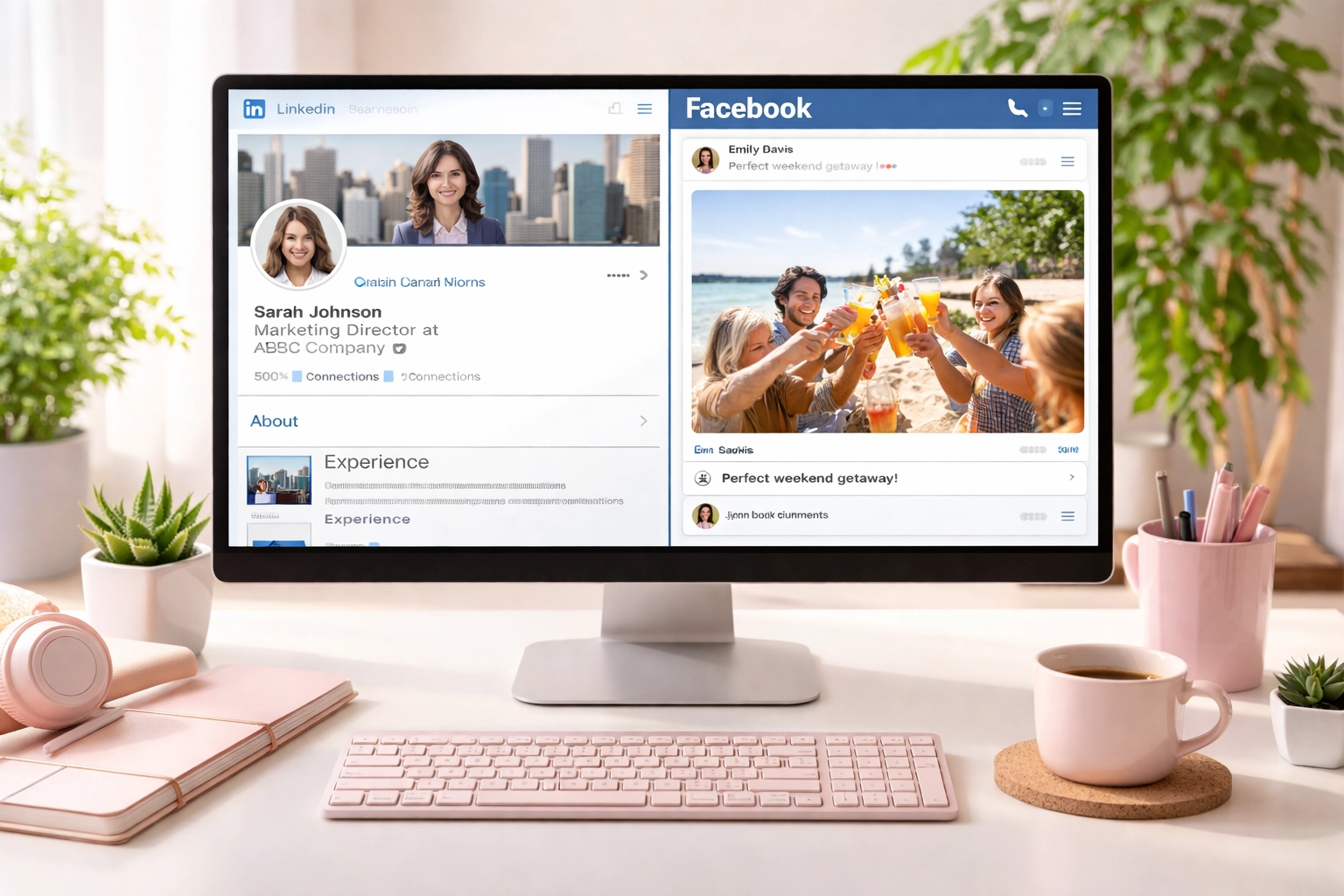
Why LinkedIn Works for Lead Generation
Higher intent leads. Here's a stat that might surprise you: ad clicks on LinkedIn are 500% more likely to convert into quality leads compared to Facebook. That's not a typo. Five hundred percent. Why? Because the people you're reaching are often decision-makers actively looking for solutions.
Precision targeting for B2B. LinkedIn's targeting capabilities are unmatched when it comes to professional criteria. You can target by job title, company size, industry, seniority level, and more. This means less wasted ad spend on people who will never buy from you.
Built for relationship building. The platform's culture is all about professional connections. People expect to be approached about business opportunities, which makes your outreach feel natural rather than intrusive.
Who Should Focus on LinkedIn?
LinkedIn is typically the better choice for:
B2B service providers (consultants, agencies, SaaS companies)
High-ticket offer businesses where each customer has significant lifetime value
Professional services like accounting, legal, or financial planning
Anyone targeting specific job titles or industries
The trade-off? LinkedIn's median cost-per-click sits around $5.61: roughly 11 times higher than Facebook. But when those clicks are coming from CFOs, marketing directors, or business owners who can actually make purchasing decisions, that premium often pays for itself.
Let's Talk Numbers: The Real Cost Comparison
I know what you're thinking. "Penny, just tell me which one costs less!"
But here's the thing: cheaper isn't always better. Let me explain with a simple example.
Scenario A: Facebook
You spend $500 on ads
At $0.51 per click, you get about 980 clicks
Your conversion rate is 2%, so you get roughly 20 leads
Cost per lead: $25
Scenario B: LinkedIn
You spend $500 on ads
At $5.61 per click, you get about 89 clicks
But your conversion rate is 10% because of higher intent
You get about 9 leads
Cost per lead: $55
Now, if those LinkedIn leads are decision-makers at companies that could sign $10,000 contracts, that $55 per lead is a steal. But if you're selling $50 products to consumers, Facebook's volume makes way more sense.
See how it all comes back to knowing your business and your audience?

The Smart Strategy: Why Not Use Both?
Here's something that might feel like a relief: you don't have to choose just one.
Many successful businesses use what I like to call the 80/20 approach:
80% of budget on Facebook for top-of-funnel awareness and lead volume
20% of budget on LinkedIn for precision targeting of high-value decision-makers
This lets you cast a wide net while also going after those golden leads that can transform your business. You're building brand awareness and closing deals with key players.
Another approach is to test and learn. Start with the platform that feels most aligned with your audience. Run some campaigns, track your results, and let the data guide your decisions. There's no shame in pivoting once you see what's actually working.
Quick Wins to Boost Your Lead Generation on Either Platform
No matter which platform you choose, these tips will help you get better results:
If you want to dive deeper into social media strategies that actually work, check out our guide on top social media strategies for growth.
So, Which Platform Is Right for You?
Let's bring it all together:
Choose Facebook if:
You're targeting consumers (B2C)
You have a lower-priced offer
You need high lead volume
You're working with a tighter budget
Choose LinkedIn if:
You're targeting other businesses (B2B)
You have a high-ticket offer
You want higher-quality, higher-intent leads
You're going after specific job titles or industries
Consider both if:
You want to maximize reach AND quality
You have the budget to test multiple channels
Your business serves both consumers and businesses
The most important thing? Start somewhere. Take action. You can always adjust your strategy as you learn what works best for your unique business.
And if all of this feels like a lot to manage on your own? That's exactly why we're here. Let us help you build a lead generation strategy that actually delivers results: without the guesswork.
Get in Touch
Ready to take your lead generation to the next level? We'd love to chat about how we can help your business grow.
Website:www.tonyageorge.design Phone: 610-298-9960 Email:info@tonyageorge.design
Comments