Looking for More Leads? Here Are 10 Things You Should Know About Facebook Group Networking
- Tonya George
- Mar 25
- 5 min read

Have you ever felt like your Facebook Business Page is a bit of a ghost town? You post a beautiful graphic, write a heartfelt caption, and then… crickets. Trust me, I’ve been there, and I know how frustrating it can be when you’re doing all the "right" things but the leads just aren’t flowing in.
In 2026, the secret to finding high-quality leads isn't necessarily about having the biggest ad budget or the most followers. It’s about community. Specifically, it’s about Facebook Groups. While business pages have their place for branding, groups are where the real conversations, and the real conversions, happen.
If you’re ready to stop shouting into the void and start building a pipeline of steady leads, here are 10 things you absolutely need to know about Facebook Group networking.
1. Quality Over Quantity: Target Niche Audiences
It’s tempting to join every group with over 50,000 members, but more isn't always better. In fact, a massive group often means your message gets buried in seconds. Instead, look for niche communities where your ideal clients are actually hanging out.
If you’re a local florist, joining a "Global Small Business" group might give you some networking tips, but joining a "Philadelphia Brides-to-Be" group puts you right in front of people who actually need your services. Think about the specific problems your business solves and find the groups where people are discussing those exact issues.
2. Master the Art of Social Listening
One of the most powerful tools in your networking arsenal is the search bar within a Facebook Group. You don't have to wait for someone to post "I need a social media manager" to jump in. Use keywords related to your industry to see what people are struggling with.
I love setting up a routine where I check for keywords like "help with marketing," "logo design," or "back office support." This allows you to identify leads the very second they express a need. If you want to dive deeper into why this works better than just posting on your page, check out why posting in Facebook groups will get you more leads than your business page.
3. The "Giver’s Gain" Mentality
We’ve all seen that one person who joins a group and immediately starts dropping links to their website. Don’t be that person! It’s the fastest way to get banned by an admin and ignored by members.
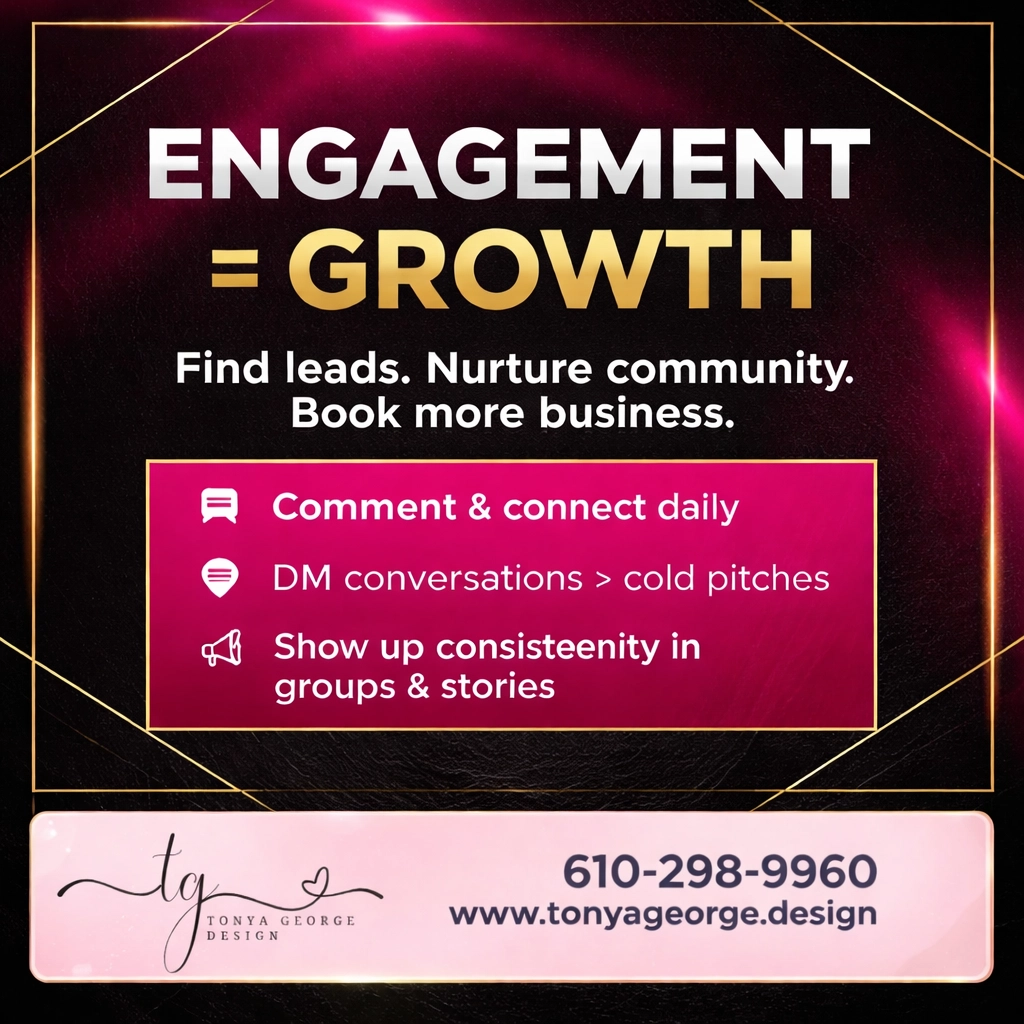
Instead, lead with value. Answer questions, offer tips, and share your expertise without asking for anything in return. When you consistently show up as a helpful resource, people naturally become curious about who you are and what you do. It’s all about building that "know, like, and trust" factor before you ever try to sell.
4. Monitor for "Buying Signals"
Beyond just keyword searching, keep an eye out for the vibe of a post. Sometimes a lead doesn't say "I want to buy." They might say, "I’m so overwhelmed with my admin tasks" or "I wish my brand looked more professional."
These are buying signals! When you see these, don't just swoop in with a sales pitch. Respond with empathy first. "I totally hear you, being a small business owner is a lot to juggle! Have you tried [simple tip]?" This positions you as a peer and a partner, not just a vendor.
5. Host Targeted Micro-Events
Did you know you can host Live Q&A sessions or mini-webinars right inside a Facebook Group (with admin permission, of course)? This is a game-changer for lead generation. By offering a 15-minute "Ask Me Anything" session about social media strategy or brand design, you’re providing immense value and showing off your expertise in real-time.
It creates an opportunity for deeper conversations. People get to see your face, hear your voice, and realize that you’re a real human who cares about their success. This level of connection is exactly does your social media manager really matter in 2026 and why the "human" element is more important than ever.
6. Leverage the Power of Social Proof
When a stranger says they’re great at their job, we might believe them. When a friend says a professional changed their business, we definitely believe them. If you have existing clients in the same groups, encourage them to share their success stories or tag you when someone asks for a recommendation.
Seeing a testimonial in the "wild" of a Facebook Group is incredibly persuasive. It acts as a warm introduction, making it much easier for a lead to reach out to you. If you're wondering how to keep that momentum going once they comment, you should read how to turn comments into clients.
7. Befriend the Gatekeepers (Admins)
Facebook Group admins put in a lot of hard work to keep their communities clean and helpful. Don't treat them like an obstacle; treat them like a partner. Reach out to them, introduce yourself, and ask how you can contribute value to the group.
Sometimes, admins are looking for experts to feature or moderators to help keep the peace. By building a relationship with the person in charge, you gain credibility. They might even give you a shout-out or allow you to post promotional content on specific days.

8. Be Intentional with Your Personal Profile
In most Facebook Groups, you’re interacting as your personal profile, not your business page. When someone sees a helpful comment from you, the first thing they’re going to do is click on your name to see who you are.
Is your personal profile "business-ready"? You don't have to make it strictly professional, but ensure your "About" section clearly states what you do and includes a link to your website or business page. Think of your personal profile as a digital business card that people see before they ever land on your official site.
9. Track and Measure Your Efforts
Not all groups are created equal. You might find that one group of 500 people results in three discovery calls a month, while a group of 10,000 results in zero. Keep a simple spreadsheet of where you’re spending your time and where your leads are coming from.
If a group feels toxic or just isn't producing results, it's okay to step back. Focus your energy on the communities that feel aligned with your brand tone and where the engagement is high. Remember, at Tonya George Design, we’re all about that "graceful" approach: if it feels forced, it probably isn't the right fit.
10. Stay Consistent (But Don’t Burn Out)
Networking is a marathon, not a sprint. You can't drop into a group once every three months and expect a flood of leads. At the same time, you shouldn't spend four hours a day scrolling.
Set a timer for 15-20 minutes a day to jump into your top three groups, answer a few questions, and leave a few thoughtful comments. Consistency builds familiarity, and familiarity builds trust. If the thought of daily posting sounds like too much, it might be time to look into how to choose the best social media support to help carry the load.

Why This Matters for Your Small Business
At the end of the day, Facebook Group networking isn't about "selling": it’s about connecting. In a world full of AI-generated noise, people are craving real relationships with real experts. By showing up gracefully, offering help, and being a consistent presence, you aren't just finding leads; you're building a community of advocates.
Whether you're looking for help with logo design, social media management, or just need a hand with your back office support, remember that you don't have to do this alone. We're here to help you navigate the digital landscape with clarity and heart.
Ready to take your lead generation to the next level without the overwhelm? Let's chat about how we can streamline your social media and help your business flourish.
Get in Touch Website: www.tonyageorge.design Phone: 610-298-9960 Email: info@tonyageorge.design
Comments